Monday, 31 October, 2011

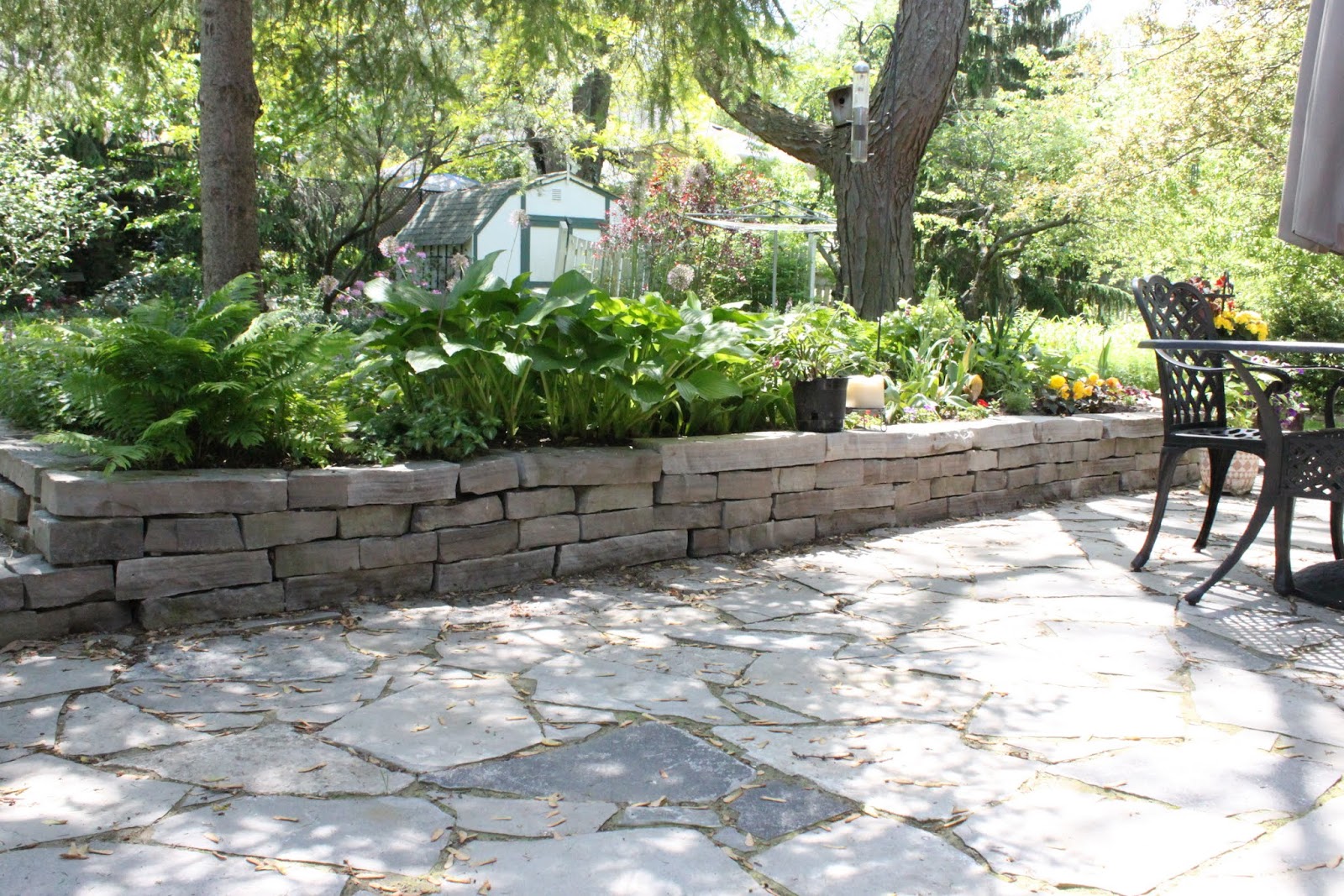
Trees have property value

I've know it for years, but had no real proof. Trees add value to property. Trees imply permanence, continuity with nature, privacy from neighbours, and above all, shade - no pun intended.
 
If you doubt this, just ask someone in an older neighbourhood how upset they would be if their neighbour cuts down their trees. Answer? Not happy at all. They intuitively feel the value of the own property decline.
 
Nice quote:  Best time to plant a tree?  Twenty years ago.  Second best time?  Now.
 
What?  Did you think the natural environment was all about you?

Monday, 20 December, 2010

New Kiwanis Seniors Project

Mayor Brian McMullan speaking at the announcement of funding for the Kiwanis Project on Geneva Street. The 40 unit, 6 story building will add to the 100 seniors units already on site next to the Fairview Mall.

Also on hand was the Regional council Chair, Peter Partington, MPP Jim Bradley, and MP Rick Dykstra.

We are the development consultants for this project. Occupancy is scheduled for November 2011.

Posted by Picasa

Valley Way Project

Construction is underway at 6009 Valley Way, converting the old St. Michaels High School into 34 apartment units for seniors.  Occupancy is scheduled for June 1st. 

We are the development consultants.

This is the first phase for this project that will later include life lease independent and assisted living units.

Tuesday, 30 March, 2010

One-fifth of Canadians can’t afford their homes

This is quite sad. One in four can not afford to own their own home, counting those who living in subsidized housing. While home ownership is not a right or often not desirable, this is not about choice, it is about an unequal distribution of wealth.  From theToront Star:

A new study from an Ottawa-based economic think-tank suggests that about 20 per cent of Canadians are struggling to afford the homes they’re living in and that national productivity is suffering as a result. The Conference Board of Canada says three-quarters of Canadians are living in homes they can afford, while about five per cent live in housing subsidized by the government. That leaves about 20 per cent of people who are struggling to cope with the cost of their homes.
One-fifth of Canadians can’t afford their homes: study

Tuesday, 2 March, 2010

So why should I worry?

The Atlantic Monthly has some interesting observations on the disconnect between acknowleging the reality of climate change and actually believing it will have a personal effect.
Yale climate change research scientist Anthony Leiserowitz. The survey asked Americans, “Who will be most harmed by climate change?” Respondents said that climate change would mostly affect:

• Plant and animal species: 45 percent

• Future generations of people: 44 percent

• People in developing countries: 31 percent

• People in other industrialized nations: 22 percent

• People in the United States: 21 percent

• Your local community: 13 percent

• Your family: 11 percent

You personally: 10 percent

This explains a lot.  Most importantly it explains the lack of urgency to prevent the worst climate change scenario.  Climate change is believed to be true, but in practice, supporting change with personal implications, like gas tax increases, get little support.  It is little wonder that politicians, even those who understand the implications, are so unwilling to act.

The study also showed that Americans are not alone in this.  The disconnect is a world wide phenomenon. 

Wednesday, 11 November, 2009

Oil crunch

It has been awhile since posting anything here. So here are some miscellaneous items around a predicted energy crunch:

From popular science an interesting chart that is likely wildly optimistic and news of several former staff members. “IEA Whistleblower Claims Agency Has Downplayed Looming Oil Shortage According to a senior International Energy Agency official, the energy watchdog agency fears the truth would trigger panic buying.” Of course former staff members who refuse to give their names may not be the most reliable sources. Still, look at the chart. It is likely wishful thinking.

To back up the concern, here is a recent Glob & Mail blog by Jeff Rubin:

"At that rate, the world has to find no less than 20 million barrels per day of new production just so the global economy can burn the same amount of oil in 2014 as it burns today. That’s why, in the oil business, you have to run faster to stand still. And even if global production can keep up with that treadmill, that leaves no allowance for any growth in demand."

What will this mean for house prices? I hope you are living close to work, shopping, and schools. If you want to move to those locations, be prepared to pay more.

Monday, 24 August, 2009

American (Canadian) Baby Requirements


The following is from the David Hughes presentation summary given on March 9 to the Alliance for a Sustainable Colorado. We simply can not continue consuming in the way we have accepted as normal in our life time. The car culture, the Wal-mart culture, the suburban culture, the consumer society. . . . all of it, will change. Our children, in our life time, will ask us why we consumed so much and left so little for them. Hughes, a retired geoscientist with the Geological Survey of Canada, makes five essential points.
  • The five-fold expansion of global population since 1850 has been made possible by non-renewable fuels, the consumption of which pervades all aspects of society –food, transportation, communication etc. (Before 1850 population growth was relatively flat.)
  • The eight-fold expansion of global per capita energy consumption since 1850 has been entirely a result of consumption of non-renewable energy. (Oil, and then natural gas, made cheap goods possible.)
  • North America consumes a disproportionate amount of energy (5 times the global per capita average). The Developing World understandably aspires to North American energy consumption levels; however, finite non-renewable resources are unlikely to be sufficient to allow this to happen, setting the stage for global conflict over energy. (This will lead to paralysis in addressing global warming.)
  • The realities of the finite nature of non-renewable energy resources are now becoming evident –peak oil in many producing countries, peak North American natural gas, ten-fold increase in uranium prices since 2000, imports of coal into the US after centuries of self-sufficiency. (Peaks are defined as the point at which production begins an irreversible decline relative to demand.)
  • Despite the hype, renewable energy technologies are EXTREMELY UNLIKELY to be able to replace non-renewable energy in existing business-as-usual energy demand forecasts –a sustainable future lies in radically reducing and rethinking energy consumption. (A future that few political leaders are prepared to address, thus requiring individual action and responsibility - sorry no magic bullet.)

Monday, 27 July, 2009

Bike-Friendly Homes


Some cities are better suited than others, but note this Realtor who focuses on helping people find homes that are "bikeable". The innovative Realtor who runs 'Tour de Homes' in Portland to show properties in neighborhoods that are bike and alternative transport-friendly is finding that despite a depressed market, business is booming.

Sunday, 24 May, 2009

Prices are up?

This is a difficult picture to explain. Comparing April 2008 to April 2009 it appears that prices have increased by 2%. Volume is still down 21% reflecting a market that does not believe in itself. Many are having difficulty selling their home and afraid to offer on another with a "sale of property" condition. Look how uneven it is. Prices are down 12% in Niagara-on-the-Lake, but Niagara Falls, Thorold, Pt. Colborne, and Pelham are doing well. I have no explanation.

Residential Sales

2008

2009

Comparison

# of Listings

Average Sale Price

# of Listings

Average Sale Price

Volume Change

Price Change

NIAGARA-ON-THE-LAKE

22

355,649

18

311,667

82%

88%

NIAGARA FALLS

131

178,668

108

190,735

82%

107%

FORT ERIE

61

180,526

46

160,699

75%

89%

ST.CATHARINES

212

195,595

142

194,576

67%

99%

THOROLD

30

190,467

27

202,848

90%

107%

FONTHILL/PELHAM

23

262,696

26

284,388

113%

108%

WELLAND

87

172,190

58

168,260

67%

98%

PORT COLBORNE/WAINFLEET

35

147,817

37

170,468

106%

115%

LINCOLN/WEST LINCOLN

27

269,306

31

255,132

115%

95%

Totals

628

195,684

493

198,941

79%

102%

Tuesday, 28 April, 2009

Volume and prices continue down

This is interesting news. Look at the overall decrease in the number residential properties sold in March 2009 from March 2008. It 83% of what it was last year. And prices are down 10%. Amazingly Niagara Falls was slightly higher in price. I have a listing of a retirement style bungalow townhouse where there are 19 current St. Catharines listings in its broad price range ($200,000 to $300,000). Just one in that range has sold since January 1, 2009. This is not a great time for sellers.

MARCH Residential

2009

2008

District

# Sold

$ Average Sale Price

# Sold

$ Average Sale Price

Volume Sold

Inc./Dec. of Avg. $

NIAGARA-ON-THE-LAKE

10

308,650

25

392,388

40%

79%

NIAGARA FALLS

85

196,442

98

195,396

87%

101%

FORT ERIE

36

163,914

42

181,213

86%

90%

ST.CATHARINES

125

181,984

161

201,462

78%

90%

THOROLD

27

175,593

20

190,238

135%

92%

FONTHILL/PELHAM

8

256,375

16

242,838

50%

106%

WELLAND

59

153,092

61

170,625

97%

90%

PORT COLBORNE/WAINFLEET

15

119,567

24

181,129

63%

66%

LINCOLN/WEST LINCOLN

19

265,089

16

266,831

119%

99%

384

185,124

463

206,738

83%

90%

Note that in smaller markets, like Fonthill, where total numbers are small, a few large sales can make the numbers look quite better than other areas.